Guaranteed reading with intelligence

Guaranteed reading with intelligence

Monday, 18 August 2014

Finding Devo: A Novel Adventure by Seve Verdad

Reviewed by Raymond Mathiesen

4 out of 5 stars


Escape from the system?

Sports journalist Russell Martell is on holiday in Puerto Vallarta, Mexico .  His wife Rosalita has recently died and Russell feels lost and hurt, drifting through life.  Then his journalistic senses begin to come alive as he starts to get the hints of stories: not sports stories, but crime and current events, with a hint of politics.  What is the real story behind a body found in strange circumstances near the beach front?  Is the rumor of a police raid on a suburban house really connected to drug cartels?  Who is the colorful character Devon (Devo) that appears to be making a splash in town, at least according to the bar scuttlebutt?  All these questions seem to draw together, but only more questions emerge.  Soon Russell and his friend, Johnny Miles, will become caught up in an adventure where mystery and uncertainty abounds.  How will ordinary citizens survive, let alone take action in a world of gangs, police and government?  Seve Verdad’s Finding Devo: A Novel Adventure is a story of mystery and action which will intrigue and excite the reader as they follow Russell and Johnny in their desperate attempt to escape disaster.

Verdad writes well and he lifts his prose with colorful phrases, giving interesting atmospheric descriptions and character details.  Describing Devo, for example, Verdad writes: “But he is smooth.  Smooth as a pythons belly.  Smooth as a razor blade, a bullet, a warhead” (Ch. 83).  Much of the book varies between chapters in first person narrative, giving Russell’s point of view, and chapters in third person narrative, giving the perspective of various other characters.  This change in viewpoint works well to keep the story complex and interesting.  The text contains quite a liberal scattering of Mexican Spanish.  Sometimes an English translation is given and sometimes not.  The lack of translation is at first annoying, but the reader soon notices that these phrases are not of critical importance to the plot.  The book can certainly be enjoyed without knowledge of Spanish.  There is occasional offensive language, both in English and Spanish, but probably less than occurs in most people’s common language.  Only the most conservative will be offended.  Occasionally there are nice hints of irony.  For example Joaquín ‘Garras’ de Jesús, a brutal federal agent, is depicted “imagining his garras [claws] wrapped around the necks of those who might be responsible for such a barbaric massacre” (Ch. 48).  Who is the barbarian we wonder?  Similarly there is a nice contrast between Garras meditating in order to concentrate his powers of destruction (Ch. 48) and Russell meditating in order to survive pain (Ch. 50).  As a point of criticism it should be noted that the first half of the book is, in sections, a bit too wordy.  The party which Russell attends gets quite a few chapters allocated to it even though it is just one night.  Similarly the revelations from the computer disk, which the police find, go on chapter after chapter, even though we quickly get the basic idea of what they are saying and their relevance.  Also the bomb explosion gets several chapters, each one from a different character’s perspective, even though the basic response of all is shock.  These sections could have been condensed to make the plot move at a swifter pace.  After Chapter 50, however, the book really takes off and never slows until the very finish.  This point should not be overemphasized.  It would be wrong to say that the first half of the book is boring: it is just a little slow in some sections.

The novel is divided into three parts.  Book I Fiesta (Ch. 1 – 28) gives an overview of the circumstances in all its many complications, introducing the reader to the book’s many main characters.  This section is characterized by questions and mystery.  Book II Rain (Ch. 29 – 83) is a narration of disaster, then capture and escape.  It begins slowly but escalates midway into a high action and adventure narration.  Book III Camacho (Ch. 84 – 114) is a further story of escape in which questions are answered and resolution is given.  It should be noted, however, that even at the end of the book there are still some open questions, and indeed the reader wonders if Verdad plans a sequel.  This is not a book where everything is tied up neatly.

The characters are nicely drawn and we immediately relate to them as real people.  We like Russell because of his inquisitiveness and initiative.  His background in sports makes him appealing to male readers.  His grief over Rosalita’s death shows him to be a man of some feeling, beyond his All-American bravado.  But as the plot progresses the reader begins to see some of Russell’s failings.  He is “egotistical” (Ch. 51) and “rash” (Ch. 7).  Also as we read further Russell evolves from an ‘ordinary’ man to one who deals decisively, if perhaps extremely, with extraordinary circumstances.  Devo, by contrast, remains throughout almost all the book a man of mystery.  He is rumored to be a “pot grower” (Prologue), but we never quite find out how he gets his money.  He is variously a “psycho” (Prologue), a “wildcard” (Ch. 52) or just a good guy engaged in “shenanigans” (Prologue).  Devo is quite a performer who carries off acts in which he appears to change height, change age, and even flawlessly change his voice.  He performs slight-of-hand (Ch. 25 & 72) and indeed Verdad manages to make Devo seem almost mystical and magical.  Devo of course has his limits.  At one point he comments “I don’ know everthin’” (Ch. 50), but he is certainly no ‘ordinary’ man.  By keeping this character an enigma Verdad instills in the readers a sense of intrigue which keeps him reading.  The book has quite a host of other characters which Verdad also successfully draws.  He even manages to sum up quite minor characters in just a few words.  Teachers’ union leader, Teodoro Viareal, for example, is described as having “the voice of an excitable Chihuahua” (Ch. 7).

Ambiguity is one of the novel’s chief themes.  As has just been noted Devo is a man of mystery.  We do not know exactly how to place him.  He could be a hero, but seen from other angles he is quite villainous.  Moral and political ambiguities are at a premium in the book.  Actions, circumstances and perspectives are described as having both good and bad points.  Government officials fight for good, against terrorism, yet they are themselves corrupt and inept.  Capitalism, Marxism and Anarchism are all made understandable, being both praised and criticized.  Verdad constantly poses the reader questions which are not easy to answer.  This is not a novel which teaches a ‘correct’ viewpoint: rather it opens up complexity.  Indeed isn’t the world just that: complex.  Aren’t different people, with different perspectives, able to interpret the same event in very different ways with very different conclusions?

Corruption is itself so central to this book that it must be considered as a theme in itself.  Vice impairs the function of institutions which could work to the good.  We all say about our little misdemeanors that ‘it doesn’t matter’.  We even say our ‘shadiness’ gives us ‘character’.  But when our dishonesty ends in real trouble we are left embarrassed, and even ashamed of our actions.  We immediately seek to emphasize what little good we can salvage and hide the bad.

The individual is a third important theme.  We are single units, yet we are also in systems.  Do our actions count or is the weight of the system too much for us to make a difference?  The individual struggles for survival, and yet so much that happens is a result of external circumstances which we cannot control.  As single people we have a certain ignorance of the system and even naivety.  Yet also as individuals we have our own talents which we can use to direct our future, and even contribute to the bigger picture.  Are we better off in a system or purely as individuals, or is a mix better?  Is anything other than a mix even possible?

Verdad’s novel is very much set in a male world of macho toughness and competition and so there are a scattering of anti-female descriptions.  Russell observes “a pair of bubble head dolls” (Ch. 2).  Police Lieutenant Benito Cuevas Romero thinks “Why stand women at all, but for one thing…?” (Ch. 8).  Women are reduced to body parts: “… breasts – important assets for a girl” (Ch. 7).  Gloria Infante Velázquez, however, stands out as a major female character who is capable, successful and dynamic.  Her husband would not be a successful mayor without her help, and he is completely guided by her strong political sense.  Indeed Gloria, if she had chosen so, “might have become mayor of Puerto Vallarta herself, or perhaps Guadalajara, her home town…” (Ch. 5).  Certainly Gloria has her failings, as any person does.  She is driven by power, money and prestige.  In the middle of one of her business negotiations we read: “Her eyes had darkened, become bland, almost dead.  Shark eyes’ (Ch. 7).   But Gloria regrets her part in the major disaster that occurs.  She has a strong sense of “guilt” (Ch. 43) and immediately sets about devoting all her energies to set things right.  When attacked by corrupt policemen Brenda, Russell’s new love interest, fights like a “wildcat” (Ch. 60) and her sister Araceli joins the fight by hurling a baseball at the attackers.  Feminist readers will be glad to find that, in this novel, women are not meekly subordinate adjuncts to men, but rather dynamic persons in their own right.

As has just been noted Finding Devo is, at least on the surface, a world of male machoism in line with 1950’s values.  Both Russell and Johnny live for sports, womanizing, drinking, cockfights and have dabbled in law breaking (minor for Russell’s part and major for Johnny’s part).  This comfortably male dominant world, however, is very much undercut when both men find themselves in real trouble.  Suddenly Russell and Johnny are victims who need to be rescued.  Their bravado wears thin as they find themselves in waters way beyond their depth.  Certainly it is a male who ‘saves’ them and certainly they are not completely helpless themselves, but the brash American male image takes a beating.  Quite a number of other male characters in positions of power are also undercut.  Their confident acceptance of corruption in various forms, as a bonus of their ‘tough-guy’ power, leads to their downfall and ineffectiveness.  Devo, as has been noted, remains an enigma.  He is certainly a ‘tough-guy’ hero, but we never quite know how to take him.  Is he to be admired or viewed with some doubt?  He ‘pulls the strings’, but to what end?  Rather than the traditional 1950’s ‘super-hero’ we have an ambiguous magician who even at the end leaves us with questions.  How much should we admire him?  Devo has intelligence, skill and charisma, but is hardly a New Age man of feeling.  Russell by contrast gains positive re-connection with his emotions and is able to associate with others in a mature way.

The indigenous people of Mexico are represented in the text, though not always in a positive light.  Those people in power in the novel do not view the Indians favorably.  They are described as “naco” a “pejorative word often used in Mexican Spanish to describe the bad-mannered and poorly educated people of lower social classes” (Wikipedia. Naco (slang):__ http://en.wikipedia.org/wiki/Naco_(slang)).  As early as Chapter 1 we read: “They have no respect.  Better to send them all north.  Let the gringos deal with them, fill their jails with them” (Ch. 1).  But the Anarchist Carlos Mansalva (Manco) takes up the cause for the Indians.  We read “The entire continent belongs to us, those of Indigenous blood” (Ch. 8).  Further we read of “Zapatistas” (Ch. 5 and following) the politically left Indigenous Mexican movement.  The indigenous are mentioned as demonstrating for their rights (Ch. 7).  Indigenous people are represented chiefly by two characters: Javier Menticlaro and Paulo Pepino Revueltas (Chimp).  Javier is an influential Zapatista leader, though he could be viewed as a ‘bad’ character.  Similarly Chimp holds the respected occupation of police officer, but is certainly not represented positively.  It must be remembered that ambiguity is strong in the novel and so both the good and the bad of indigenous people is discussed.  Javier is a particularly ambiguous character.  We can understand him as an indigenous person, but do not necessarily agree with his actions.

In turn with the macho atmosphere of the book LBTIQ characters are absent.  There are indeed a couple of anti-Queer comments made in Chapter 2.  Perhaps one positive character could have been included in the party, at the beginning of the book, and we know that police are not exclusively heterosexual.  In an novel which so emphasizes ambiguity, and which asks so many questions, it is perhaps a missed opportunity that LGBTIQ characters were passed over.

The Aged, a much ignored group, are also absent.  They perhaps would have been inappropriate in the heavy partying, high action world of the novel.

As has been mentioned ambiguity is prevalent in this novel and peaks when it is viewed from the Marxist / Capitalist debate.  The Capitalist U.S. is viewed as a very safe place compared to the Socialist Mexico, yet the Capitalist desire for money and prestige is a very major contributing factor in the crisis of the novel.  Indeed Gloria’s Capitalist ventures end in defeat, not triumph.  But similarly Marxism is represented as being falsely hollow. Media Minister Lazarito Charlado is an appointee of the Socialist Reform Party, but is interested in the “advance … [of his] … fortunes” (Ch. 3), that is, in the personal moneys he can amass and the power and prestige he can gain.  Even more the Socialist influenced Zapatista movement is depicted as violent and aggressive.  At the heart of both Capitalism and Marxism corruption can lead to a political culture where power, authority and legitimacy are undermined.  Anarchism, a political ideology more left than Marxism, is partially represented in the text by the activist Carlos Mansalva (Manco).  Manco makes quite good arguments against Capitalism and for the advancement of the indigenous Mexican people, but he has quite violent tendencies. Even more Maco is depicted as being falsely hollow, like Lazarito, being motivated by the large amounts of money he can earn for his dubious dealings with Chimp (Ch. 58). Despite this criticism, though, Anarchism has a prominent place in the novel.  The actions of private citizens are seen as being more effective than those of organizations.  But can even individuals be trusted to act for the ‘good’?  The questions abound.

Finding Devo is very much a postmodern novel in the sense that there are no hard edges or categories anywhere.  As Brenda observes: “People are brutal, Russell.  The whole lot of us” (Ch. 18).  Even the ‘good’ are capable of doing ‘bad’ given the right circumstances, and indeed what is good and what is bad depends on the observer’s perspective.  Even the ‘bad’ character Masked Apocalypse, who by his nom de plume is associated with the devil, is given human motivation.

Verdad has written an action adventure, rather than a more poetic book, and so there is not much imagery and symbolism in it.  There are, however, a few elements of the symbolic.  Devo’s nickname hints at the word devolution, suggesting escape from a system, but once again questions, rather than answers, arise.  Which system is being escaped from?  Is it good or bad, or perhaps both, to escape a system?  Is to devolve to go backwards, or is there still a creative forwards motion in it?  Where exactly is Devo taking Russell?  Similarly, through much of the novel unusual weather hangs over Puerto Vallarta.  Light rain hangs over the city like a “mist” (Ch. 60) obscuring the view, making people feel slightly at odds.  This is symbolic of the crisis of the novel where for most of the characters, the action remains a mystery.  Confusion abounds and truth is obscured.  People think they have the answer, but are deluded.

Looking deeper into symbolism and myth it should be noted that Devo is a magician.  He uses metaphoric smoke and mirrors to trick, to obscure, when it suits him.  We never quite know where exactly he stands.  He uses electronic ‘trickery’ to help him pull off his ‘secret agent’ stunts.  This element of the novel draws upon the cultural mythology represented by the Tarot card The Magician.  Sally Annett and Rowena Shepherd observe that this card implies both “rules … [and] .. cheating” (The Atavist Tarot:__ London: Quantum, c2003, p. 47), and both Arthur Edward Waite (The Pictorial Key To The Tarot:­­__ Stamford, CT: U.S. Games Systems, c1971, p. 72)  and Giordano Berti and Tiberio Gonard (Tarot Of The New Vision:__ Torino, Italy: Lo Scarabeo, c2005, p. 19) note that the card implies both virtue and trickery.  Indeed going further Annett and Shepherd note that, when thinking of the card, “we must be aware that man’s ability to manipulate the elements can be used for evil as well as good” (Atavist Tarot, p. 49).  Berti and Gonard particularly emphasis that “ambiguity” (New Vision, p. 19) is the key to the card, and as has been noted this is a major theme in the novel.  Where exactly does Devo stand in the novel?  Is he a force for evil or good?  Karen Hamaker-Zondag notes of the card: “He has a vision or ideal to which he is devoted, and on which he expands his energies. [ … ] Hence The Magician possesses both flexibility and courage, and his vitality makes him want to do something worthwhile.” (Tarot As A Way Of Life: A Jungian Approach To The Tarot:__ York Beach, Maine: Samuel Weiser, 1997, p. 132)  Devo is certainly heroic and his mind and actions are definitely set on a particular problem or project.  Sallie Nichols writes: “The Magician will include us in his plans.  He welcomes us on stage as his accomplice.  Some degree of cooperation on our part is necessary for the success of his magic.” (Jung And Tarot: An Archetypal Journey:__ York Beach, Maine: Samuel Weisner, 1980, p. 46)  Russell and Johnny certainly become caught up in Devo’s plans and in a sense he needs them to work his magic.

Seve Verdad’s Finding Devo is an exciting adventure / mystery novel with interesting characterization and generally good writing style.  The plot revolves around the main themes of ambiguity, corruption and the individual.  There is a fairly strong political emphasis, though no one system is favored as being ‘right’.  Men and women are depicted realistically, and in terms that would be viewed positively by those interested in modern Gender Studies.  Indigenous Mexicans are depicted, partially favorably, partially unfavorably.  At 565 pages the novel is probably not a weekend read, though it can certainly be read enjoyably over a longer period of time.  I am happy to rate this book as 4 out of 5 stars.


Finding Devo by Seve Verdad (Amazon Book ed.)

Finding Devo by Seve Verdad (Kindle ed.)

Finding Devo by Seve Verdad (B&N eds.)


Seve Verdad's Facebook Page

Seve Verdad's Twitter Account

Seve Verdad's Pinterest Account

Seve Verdad's Instagram Page

Seve Verdad's StumbleUpon Page

Seve Verdad's LinkedIn Page

Seve Verdad's Web Page


Seve Verdad

Monday, 12 May 2014

Pest On The Run by Gerry Burke

Reviewed by Raymond Mathiesen

4.5 out of 5 stars


Big trouble and light hearted investigations…

A beautiful stage show star, come whore house madam, is suddenly foully murdered, despite her apparent gangster protection.  A disgruntled Japanese business tycoon hires a hit man to assassinate Australia’s Prime Minister.  An unbeatable game show contestant takes a recreational bungee-jump, only to have her rope break in what her friend thinks is dubious circumstances.  Enter the low-life world of Paddy Pest, sometimes Private Investigator and sometimes secret agent for Australia’s spy bureau ASIO.  Pest is based in Melbourne, Victoria, Australia, though is very frequently an international traveler.  He is a master of dubious disguises, and often manages to solve the case despite his shortcomings.  Here is a world where virtually everybody has a rancorous underbelly, and where murder is a common life event, but where good will eventually win out (even if by fluke).  These humorous short stories wil beguile you, entertain you and make you chuckle.  Gerry Burke's Pest On The Run: More Humorous Short Stories From The Paddy Pest Chronicles (iUniverse, c2012) is ideal for the lover of crime and murder mystery tales, but will also suit busy people looking for a witty amusement to fill a free hour or two.

Paddy is a frequent visitor of both upper class and lower class hotel bars, and these tales have the ethos of a pub yarn: unlikely events, boisterous pride, and male machoism lubricated to dubious heights.  The style is very chatty, with Pest narrating his stories as if he is talking to an interested acquaintance.  There are asides to the reader.  When pertinent, Paddy occasionally reminisces about his past, including his childhood.  With a flair for drama he sometimes skips over the more mundane details to get to the action and juicy bits.  These stories certainly deal with the darker side of life, and a few times death is narrated, but the great majority of these plots take place after the brutality is over.  This book is about solving crime, not depicting crime and is overwhelmingly light hearted.  Paddy is certainly a ladies man and the ticklish subject of sex is often alluded to, though not specifically depicted.  In tune with the ‘pub ethos’, Paddy’s descriptions of women can be quite humorously crude, without actually being offensive, except perhaps to the conservative.  There are several laugh out loud moments and every story will leave the reader smiling.  Most stories have moments of high drama, though here the unlikeliness of the action is taken tongue in cheek.  Occasionally Burke includes good phrasing that lifts the text.  We read for example the atmospheric and slightly philosophic sentence: “Often, when you visit a country with a different culture, it is difficult to break through the veneer of reserve that camouflages a human spirit that is primed to explode” (Burke, p. 25).  More of this care in writing would make the book even better.  There is occasional foul language, but this is completely in tune with the macho low-life spirit of the book and will not offend most readers.  This is a book by an Australian author and there is quite a sprinkling of colloquialisms and cultural references which may be unfamiliar to international readers.  Some are explained in the text, which erases any difficulty, but some are not.  These are, however, in no way essential to the text and will at the most cause a moment of wondering before the reader passes on.

In his collective stories Burke presents us with an interesting portrait of “Patrick Pesticide aka Paddy Pest” (Burke, p. v).  Paddy is of Irish heritage, though primarily Australian in outlook.  Burke thus combines both Irish luck and silliness, with the Australian macho male.  He is a gambler and bets on race horses, and has quite an eye for the women.  Paddy is of dubious background.  He says of himself “I would not say I was straight or bent – somewhere in the middle” (Burke, p. 4).  On the down side Paddy can be quite sexist, seeing women in many ways as bodies first.  Full of pride Pest sees himself as a “master of disguise” (Burke, p. 37), though others are not nearly as convinced.  While Paddy is in training in New Guinea one character comments on his being “dressed in a ridiculous head-hunter’s outfit” (Burke, p. 188).  By creating this mix of good and bad Burke has created an endearing, eccentric character that we can like because he gives us a slightly spicy escape from our ‘ordinary’ lives.  Paddy reminds us of the rough, tough boy at high school who everybody admired, but who never really did anything seriously wrong.  He is a ‘lad’ and the reader is charmed.  Paddy of course comes in a great tradition of incompetent Private Investigators / Spies.   We think of Austin Powers, Inspector Jacques Clouseau, Agent Maxwell Smart and even Inspector Gadget.  Burke, however, has given us his own particular spin on the pattern, and we do not feel that we are reading a complete copy.

A few other characters pop up more than once.  There is Stormy Weathers, the totally competent ASIO agent, who has a cover job as barmaid at Sam’s Fly by Night Club.  There is Justin O’Keefe, the slacker police Inspector with an attitude.  Mostly these secondary characters are at a minimum.  Burke does, though, give them personality traits that flesh them out a bit.  Stormy, for example, is a jealous lover.  Occasionally Burke gives us a potted history of a character, giving us a summary of their eccentricities and adventures.  Murder victim Frankie Hogan, for example, is a memorable woman with true spirit.  Burke describes her in three pages giving the story depth and poignancy.  Burke is quite skilled at this kind of detail and his writing would benefit by including more of it.

As we have noted Pest himself can be quite sexist.  At one point for example he outrageously poses the equation that large breasts equals many friends (Burke, p. 200).  Much of the humor, however, arises from the fact that many women are in actuality much more competent than him.  As Pest himself says: “There had been two attempts on my life and, once more, I had been saved by a woman” (Burke, p. 77).  These stories are indeed filled with dynamic, no-nonsense women you would think twice about crossing.  There is a dangerous female assassin, successful business women, and several able female secret agents.  Frankie Hogan takes no sexual nonsense from men, has “personality” (Burke, p. 3), and is a success in all her career ventures.  Not to err too much on one side Burke has included one nasty, negatively-portrayed, female villain (Burke, p. 118).  On the whole this book will pass Feminist standards, though some may not take the humor.

Shifting to male roles and Gender Studies it should be noted that these stories are in some ways very much in the ethos of the 1950’s though they are set in contemporary times.  This is the world of the tough guy, the gangster, the merry bachelor.  Men should not really have soft feelings.  Hyman Finkelstein, a low-life criminal, doesn’t even like people looking at him (Burke, p. 151) let alone be able to have a mature relationship.  Fear is a sign that a guy must be a “nancy boy” (Burke, p. 230).  Paddy, on the other hand, is able to hug an old, male friend (Burke, p. 17).  Women are very much a sexual adjunct to the male ego.  Paddy does have a kind of steady relationship with Stormy, but even that is very much a breakable, uncommitted relationship.  This whole ‘retro’ male image is, however, held up to debunking humor.  This male world is on shaky ground.  The great male image repeatedly is out shone by women and needs females to save it.

As with the issue of women and Feminism, Paddy Pest, and those he meets, can be quite homophobic.  Paddy, for example, refers to gays by a disparaging name (Burke, p. 244), as does Hyman Finkelstein (Burke, p, 151).  Finkelstein is particularly negative about gays. The actual representations of LGBTIQ people, however, on the whole are not that negative about that aspect of their lives.  LGBTIQ people are primarily represented by two stories.  First there is The Candidate which spotlights Lindsay Dove and his life-partner Jay Sniggle.  Lindsay is a U.S. presidential candidate and Jay is an IT consultant.  Then there is Who Was That Masked Man? highlighting the ‘butch-fem’ caterer Cate Edwards.  Cate is a villain, but the story is not negative about her being a lesbian.  This second story indeed has Ellen DeGeneres making fun of Paddy’s cloddish ignorance of the LGBTIQ community.  Ellen is mentioned (as an LGBTIQ person) in another story (Burke, p. 84), as is k.d. Lang (Burke, p. 154).  Gay Mardi Grass are mentioned twice.  A number of times women are suspected to be lesbian (not in a negative way) and a ‘drag-queen’ secret agent is depicted canoodling with an unwitting male politican (Burke, p. 138-139).  On another occasion Paddy comes upon a not so pretty ‘drag-queen’ (Burke, p. 21), but this is the only negative description, and of course not all transvestites are necessarily beautiful.  Once again the issue should not offend interested parties as long as the humor is taken into account.

The often ignored Indigenous and Racial Minorities also feature.  Lindsay Dove is “black” (Burke, p. 79) as well as being gay.  In A Long Time Gone Australia’s Jewish minority is highlighted in the character of Hyman Finkelstein.  Hymie is a gangster villain, but Burke goes out of his way to point out that he is not being anti-Jewish (Burke, p. 158-159).  Louey is a successful “Polynesian” bar owner on Norfolk Island (Burke, p. 121).  In The Goodbye Wave, though, the head of Fiji is referred to as a “baboon” (Burke, p. 129).  This is a rather racist description, even for humorous purposes.  Overall this is a very multicultural book, with Chinese, Japanese, Philipino, Hong Kong, Russian, Balkan and Greeks mentioned with stories being set in many different countries.  We get a true sense of the world, rather than a monosyllabic, white Anglo-Saxon perspective.

The aged feature in a very minor way in these tales.  There is one uncomplimentary portrayal (Burke, p. 176) and one positive description of an older (though not necessarily aged) woman (Burke, p. 195).  Burke could lift his game a little here, as the world is not full of only those under 55 years, even though some agencies such as advertising would have us believe this.

From the Capitalism verses Socialism perspective wealth in these stories is certainly suspect.  These tales show only a very slim difference between corrupt businessmen and rich gangsters.  Politicians and even judges don’t exactly receive compliments.  The lower classes are not lauded, but they are not seriously criticized.  The Little people’ more often than not help Paddy.  The middle class is to a degree absent, but this is not so surprising as they are not likely to have the funds to hire a Private Investigator and are too ‘clean’ to have information on gangsters.

From the broader outlook of society in general, the Catholic Church is foot-noted as being anti-gay (Burke, p. 82 & 154) and rather a kill-joy for the more spirited members of the world (Burke, 149).  The Police are depicted as being often incompetent and corrupt.  These two institutions of society, perhaps in tune with Socialism, could be improved.

Before departing from these various social issues it should be stressed that these stories rely very much on outrageous statements and circumstances for humor.  The book is full of politically incorrect text, but we are meant to take everything tongue in cheek.  If we read these tales too critically we will be deeply offended, but Burke wants us, on the one hand to ‘lighten up’, and on the other hand to look a bit deeper.  If this is kept in mind the book can very much be enjoyed.

From a Postmodern perspective it can be noted that there are no hard edge binary oppositions in Pest On The Run.  There are definite ‘bad’ guys, but good and bad blur.  As has been noted, Paddy himself is shady.  We like him precisely because he is a ‘wag’.  In Murder Before Lunch Pest even works for a crime boss.  This blurring of categories makes for a more realistic and interesting read.  It adds ‘spice’ and avoids boring oversimplification.

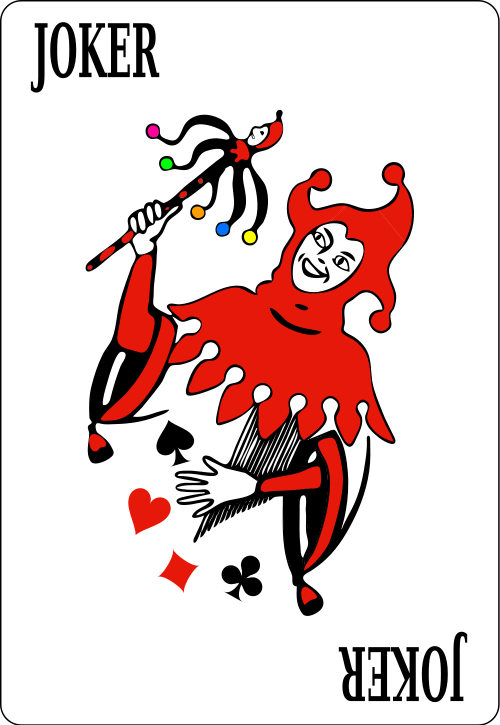
Many stories have a mythological quality, and indeed these elements can be what attract us most to an author’s work.  For Paddy Pest we need only to turn to the Joker Card in the modern playing card pack.  As court jester, the Joker is dressed in a funny costume, and Pest similarly assumes dubious disguises.  The Joker’s cap has pretentious baubles and he holds a wand topped with a manikin of himself.   Pest is none to retiring in describing his own talents as a spy and lover.  Yet the Joker possesses almost magical powers that no other card has, and in its presence many a losing hand can be transformed into a winning hand.  Pest does solve the case, even if by sheer luck.  Of course, most of all, the Joker tells silly stories and jokes, and that is the overwhelming ethos of Burke’s book.

Gerry Burke has written a very entertaining book for the not so serious at heart.  He manages to take a look at a wide variety of social issues, such as Feminism, while at the same time making us laugh.  The dark world of crime is depicted, occasionally with the brutality described, but good always wins out and we are mostly entertained by a light hand.  Most stories are around 20 pages long, and are ideal reading if you are short of time.  Pest On The Run was a pleasure to read and I am happy to rate it as 4.5 out of 5 stars.


Pest On The Run (Book ed.)
Pest On The Run (Kindle ed.)


Gerry Burke's Facebook Page
Gerry Burke's Facebook Author Page
Gerry Burke's Web Site


Gerry Burke

Friday, 28 February 2014

Armageddon and the 4th Timeline by Don Mardak

Reviewed by Susan McMichael

4.5 out of 5 stars


A thrilling ride from the first page…


Armageddon and the 4th Timeline by Don Mardak is a thrilling ride from the first page.  This science fiction novel combines time travel, spiritual themes, a fascinating mix of characters and modern intrigue to create an unputtable down novel.


We meet the CIA Director, Scott Cunningham, a former Navy SEAL, and his Assistant Lori Colbert, addressing a meeting after a terrible terrorists attacks.  We also meet husband and wife Kathy and Eric who are in Lhasa, Tibet, on a spiritual quest.  Through Eric's time travel, both worlds intersect.  Mardak's premise throughout the novel is that there "is a spiritual universe, and mankind has the ability to rise into a higher level of consciousness where all conflicts can be resolved peacefully without resorting to wars, or threatening a nuclear holocaust.”


Mardak's Armageddon and the 4th Timeline is a science fiction novel, containing elements of time travel.  It is set in 'the Present' with a clear aim of trying to reconcile what is happening.  There is a definite sense of good and bad in the novel.  Mardak’s fascinating use of the scriptural characters of Paul and Silas to both examine Christianity, and to change the future, is an amazing read.  How Mardak structures the novel is particularly well done, so that the ending is both satisfying, works in a science fiction way, and races to the finish, all at once.


The novel examines the various tenets of a number of the main religions (Christianity, Tibetan Buddhism, and Judaism) using them as plot devices: e.g. Paul's Missionary Journey.  This exploration of religion is quite a wild ride, but worth it.


The first third of the novel introduces us to the characters: to the CIA, the issues related to Eric and Kathy, and to the Himalayan mystic Shimahn.  This first third also introduces broader geopolitical issues, as well as setting up the 'four dimensional world of space time'.  In the second section of the novel the actual time travel begins. We see its effects from Eric's point of view. He is an interested participant.  In this section Mardak makes good use of structure to make his point, but also to move the plot along.  The last third of the novel brings everything together: the time changes and the new ideas and perspectives.  There is an ending which is in some ways surreal, and which is beautifully realized.


One of the main themes of this book is religion.  It's a fascinating book because I believe many people see Religions as having "Truths" and this novel certainly plays with some of those.  Anyone who believes that the Bible is the written word of God will have a difficult time with this novel.  That said, it is far from Mr. Mardak's aim to make anyone annoyed about this.  I feel, quite the contrary.


The novel discuses time travel and how it can save the world.  What difference would it make to war?  Mardak also asks what kind of world are we creating?  How do we cause and prevent nuclear holocaust?  Armageddon and the 4th Timeline is also about an attitude of helping and working together to create change.


The relationships that are explored in the novel illustrate personal growth and caring.  Kathy and Eric, Colbert and Cunningham, Paul and Silas are all studies in how we see, how we relate, and how we can change.  The focus in Armageddon and the 4th Timeline is how this happens.


A minor quibble about the characters is the character of Kathy.  I didn't feel that she had very much to say for herself, and was a little too passive for my liking. Eric, however, is well written and his relationship with Kathy is nicely drawn.  The CIA group are depicted as a good bunch.  They sounded quite different to Eric and Kathy: they were exciting and gung-ho.  They were well drawn.


The scenes in the desert were particularly evocative and the relationships depicted there, though brief, remind the reader that some of the central ideas of the novel are relationship and awareness.  The different families in the desert remind the reader that families have many different shapes.  In terms of diversity and families there are a range of families: Lori Colbert is a divorced mother, Kathy and Eric have been married seven years and there are the families in the Sinai desert.  There is also the relationships between Shimahn and Eric and Kathy, and between Paul and Silas.  Mardak also emphasizes diversity by depicting various religions and mixing those religions in unique ways.


This novel runs along at a fast, fast pace.  At times it fairly gallops.  It has fantastic ideas about time and space and makes the reader think.


Armageddon and the 4th Timeline has a thoughtful purpose, but is highly readable and action packed.  Mardak's plot is well structured and he makes good use of characters.  From the first' gloomy Thursday in Langley…' I wanted to read on, to find out what was happening, what was going on.  The science fiction genre makes a twist with a spectacularly good ending.  I am happy to rate this novel as 4.5 out of five stars. 


Armageddon and the 4th Timeline (Book ed.)

Armageddon and the 4th Timeline (Kindle ed.)


Don Mardak's Facebook Page 

Don Mardak's Facebook Author Page 

Don Mardak's Web Page 


Don Mardak

Wednesday, 11 December 2013

Crimson Footprints by Shewanda Pugh

Reviewed by Raymond Mathiesen

5 out of 5 stars


The balancing act of life…

Deena Hammond is a 24 year old architect living and working in her home town of Miami, Florida.  In some ways Deena is very successful, but she comes from a poor background, and in many ways she is still inextricably tied up with those origins.  Her grandmother, Emma Hammond, who brought Deena up, is constantly demanding and never satisfied.  Deena’s adult brother Anthony is a small-time criminal, and her sister Lizzie, though still at school, is incorrigibly wayward and seems headed for a disaster of a life.  Deena is half African-American and half white and feels that she was never really accepted by the black side of her family when they took her in as a child.  In very harrowing circumstances Deena meets Takumi (Tak for short) Tanaka, the son of her world famous, distant and demanding boss Daichi Tanaka.  Immediately the personal chemistry and attraction seems right, but everything else between these two people seems impossible.  Deena is a mere underling.  Should she even be talking to the son of the owner of the business she works for?  What is more Deena’s family very much expects her to date a black man.  Can these two people overcome the odds and form a friendship, or even the romance they both desire?


Shewanda Pugh’s Crimson Footprints can certainly be classified as a romance; however, it is much more than that.  It is a story of class consciousness and racial division.  It is about the struggle to find the right equilibrium between work and family, and it is a story about trying to ‘do the right thing’.  Most of all, this novel is about balance in all things.  We are all different, but we must overcome our resistances and come to the center ground if we are truly going to be a success in life.


Pugh has managed to successfully weld sweet romance with biting ‘slice of life’.  Romance, especially the first phase, usually seems enjoyable, even with its ups and downs and Pugh captures the pleasant nature of first love well.  Mixed in with these chapters, though, are insights into the often seedy, cruel world of the lower class.  This juxtaposition works very well, jarring us, and reminding us that while life can seem pleasurable, there is always harshness, perhaps not too distant from us.  There is considerable irony in the contrasts between Deena’s romance, and her striving for career success, and Lizzie’s pure-flesh ‘sexploits’ and base efforts to get ahead (for example the Ch. 7 / Ch. Ch. 8 contrast).  Pugh’s phrasing, particularly at peak moments, is often excellent, lifting her prose from the mundane.  In Chapter 1, for example, which describes the run down suburb of Liberty City, we read of “Torn fences that imprison rather than embellished” the houses which Deena passes.  This care with words, and occasionally poetic turn of phrase, helps to mark out the book as more than the average read.  There are moments of pure humor, particularly the events surrounding Takumi’s cousin Mike and his fumbling attempts to capture Deena’s attention (CH. 47 & following).  There are also moments of true shock and also scenes of high drama that take us far from the average world of romance.  Pugh has included occasional swearing, and sex is very openly discussed and depicted.  This may offend conservative readers, but is certainly justified by the themes, characters and story line.


The book has a more unusual plot structure.  Part One (Ch. 1 - 7) serves as a general introduction to the Hammond and Tanaka families, and to Deena’s work.  The plot peaks early, then builds as complications follow.  Part Two (Ch. 8 – 42) is a very long section covering Tak and Deena’s extended holiday road-trip across much of the U.S.  Romance blooms as Deena learns to loosen up, then a series of couples are met.  These couples serve to show how Tak and Deena’s love perhaps could work.  The sequence comes to an unexpected close as events suddenly twist in a crisis.  This Part could perhaps have been divided into two sections, though the whole sequence is certainly united by the structure of the holiday.  Part Three (Ch. 43 – 64) covers the problem of the hidden nature of the romance, centering on complications during a working holiday break.  The disastrous climax of the novel is reached followed by a brief sequence wrapping up circumstances with the Tanaka family.  Part Four (Ch. 65 – 67) describes the complications with Emma.  This section is quite brief and perhaps could have been extended a little considering Deena’s grandmother’s earlier resistance, tenacity and belligerence.  The Epilogue, set some years in the future wraps up the plot lines nicely, though one question is pointedly left open.


As already indicated the main theme of Crimson Footprints is balance, or Difference/Harmony.  We like people ‘like us’, but we are all individuals.  What does it really mean to be ‘like me”?  Is this merely a matter of externals, or are internals more important?  We need to accept who people are, and where they came from, but not be bound by that.  An openness in outlook and balance is needed otherwise we will be bound forever in very limited circumstances.  On another level, how do we handle the conflict between work and family / social life?  Is one demand more important than another?  Can we neglect either?  Of course there are no easy answers, though those may be the first to come to us.  Life is complicated and this book explores these complications.


The family is a second important theme.  Families can be both sources of pain and sources of strength, and both features can occur in the same kinfolk.  Families are what make us, but at the same time are what we grow from.  They can be conservatively stolid, relying heavily on tradition, or can adapt to new circumstances.  We can ignore them, but we can never really escape them.  Following from tradition, a family can be a basic mother, father and children, or it can be a less conventional grouping.  Families are very basic to human nature and being taken in, or adopted, does not make it of less importance to us.  This very contrary institution in fact dominates us.  We come from families and then we make new families, or at least extend those which we have.


Another important theme in the novel is what could broadly be termed as success.  We are encouraged to ‘do our best’, to ‘do good’, to ‘shine’.  What is success and what are the traits that allow us to see it?  Is it hard work resulting in material objects?  Is it love, honesty, caring and ethics resulting in respect and attachment?  Is there room for both?  Millennia ago the ancient Greeks asked, “What is the good citizen?”  In response they formulated the idea of “Virtue” (Ben Dupre. 50 Philosophy Ideas You Really Need To Know: Quercus, 2007, p. 96 – 99), that is, the character traits that make us wisely successful in both working life and family life, and indeed everything that we do.  This idea of ‘virtue’ is central to Pugh’s novel.  Deena struggles to be a ‘good person’ ethically, socially and work-wise.  For her these are not separate issues, and not merely because she is in love with the boss’s son: all are tied up with who she is as a person.  Of course there is success in terms of one social class’s ideals or another’s, but what is truly wise success.  In the end isn’t success really related to what makes us “happy” (Ch. 20), as complex an issue as that may be?


Following from this there is also a minor theme of ‘religion verses ethics’.  The Christian religion claims to be the guide for good, but surely considering the evil things that befall us for no reason we should conclude that God in some ways unfairly hates us (Ch. 2)?  Indeed doesn’t hell hang over us like some permanent, inescapable damnation (Ch. 2)?  Even if these things aren’t entirely correct theologically, aren’t accusation and condemnation how Christians really act?  Is this really what good is all about?  Equally, for so many, isn’t Buddhism in reality simply a constraining tradition full of rules about obligation (Ch. 10), rather than a source of right behavior leading to internal peace?  Once again this may not be correct according to the true tenets of Buddhism, but isn’t this how it often works out in practice?  If religion in practice isn’t such a good guide for ‘goodness’, what do we take as our guide?  Surely we must fall back into the painful position of finding our own way, and indeed Deena must struggle to find her own position.


Deena Hammond is an interesting character who we immediately like and care about.  What strikes us is her positivity in very negative circumstance and her determination to get somewhere better.  Deena is a ‘Star’, without being too perfect.  Despite her determination, in certain circumstances, particularly with her Grandmother, she collapses.  What unites these converse character elements is the fact that she is a self-accuser.  Her accusation drives her on to career success, but also holds her up in her battle with her domineering Grandmother.  While she accuses herself, Deena is somewhat driven to help others, particularly her siblings.  This kind of complexity does much to make Deena seem more real to the reader.  She is no cardboard cut-out.  Deena must learn to limit her career “expectations” (Ch. 12) and not rely so much on “reason” (Ch. 16) alone to solve problems.  These are human challenges the reader can recognize and understand, even if they do not personally suffer from them.


Takumi Tanaka is in some ways the ‘perfect man’ every woman dreams about.  He is “athletic” (Ch. 1), a success at both art and business (Ch. 5) and caring.  His limitation is that, while he can understand Grandmother Emma all too well, he only has a limited understanding of his own father and family.  Despite this the reader wonders if Tak could have had just one or two more faults to make him more human.


Grandmother Emma Hammond is an appropriate nemesis.  She is a narrow minded bigot, uneducated, an immense hypocrite and appropriately venomous, though occasionally she can give way.  The words “consistently hostile” (Ch. 1) certainly sum her up.  Her Christianity is certainly a biting irony.


Daichi Tanaka is describe by a magazine is “Architectural God” (Ch. 3) and his behavior exhibits the kind of flaws that such adulation would certainly bring.  He can be arrogant, bad tempered, rude and cold, but he is also willing to give others a chance to prove themselves, and even work to bring out the best in people. Daichi is like Deena in his determined, even driven nature, and in his concern for others, but quite different in his self-adulation.  Pugh has these two character form an interesting and rich relationship, and has managed to make Daichi equally complex.


Examined from the perspective of Feminism it can easily be seen that Deena is a successful young career woman and entirely self-made. Deena’s challenge is to live up to the goals set by Betty Friedan (Cathia Jenainati. Introducing Feminism: Icon Books, 2010, p. 90 – 94) of being successful both in her job and family life, without falling into the same traps that men do (primarily flavoring career over relationships).  Hatsumi, Tak’s mother, however, is by marked contrast a 1950’s woman: unloved, unhappy, trapped at home, but beautifully dressed.  Even Hatsumi, however, has a certain dignity and demonstrates a mind of her own, showing how women can rise above these circumstances.  Emma, for all her failings, is certainly headstrong.  Lizzie has a mind of her own, but serves as representative of the ‘sex object’ so propagated by traditional media and male driven dominance.  Pugh makes it more than clear that according to her this option is not to be desired.  Rhonda, Deena’s aunty, is also a career woman (Ch. 4), but demonstrates the bigotry which the ‘new woman’ faces as she must “constantly field unfounded accusations that she is a lesbian” (Ch. 4) simply because she does not fit a very narrow picture of what a woman should be like.


Daichi is very representative of the 1950’s male role model, being a stranger to both his feelings and his family, and believing that his duty as a male is solely to provide income.  He sees himself as the family figure head.  As the story progresses, however, this position comes under increasing, condemning scrutiny.  Tak, by contrast, is the twenty first century man: not New Age / Spiritual, but none the less in touch with his own feelings, and caring of others.  As an artist he expresses freedom and creativity, rather than being trapped in a rigid role.  Anthony Hammond, Deena’s brother, represents that large group of men who have not progressed to the standard proposed by twenty first century male Gender Studies.  He is everything a man should not be, trapped in a 1950’s ‘tough rebel’ role, renamed “gasgsta” (Ch. 56) as if it were something new.


This is by far a predominantly heterosexual novel, though, LGBTIQ people are very briefly represented by Bridget, “a lesbian” (Ch. 20), who is positively depicted as a successful career woman.  Two quite large families are depicted in the novel, plus other minor characters, and we wonder if more of a representation of LGBTIQ people could have been made, particularly in a book where ‘difference’ is an important theme.


The aged, who are often ignored in society, are chiefly represented by Emma Hammond, though this is clearly not a sympathetic depiction.  Of course being old does not automatically make you nice or wise.  The absent character of Eddie Hammond, Emma’s husband, is equally uncomplimentary, though that is not surprising as the two belong together, having chosen each other as partners.  Yukiko, Tak’s grandmother, by contrast proves to have learned wisdom over the years and in an important scene gives Daichi very useful words of advice.


This is a novel very much about minorities and highlights the difficulties those who would reach beyond their group face, as well as the difficulties those of mixed racial background face.  African-Americans are highlighted, as are the U.S. minority of Japanese-Americans.  This is, however, not really a book about political agenda or advancement in the standard way Post-Colonial Studies thinks.  We do not, for example, really hear of civil rights.  The social history behind African-American food is certainly mentioned early on (Ch. 4), and we hear that this is the food of slaves who must do with left overs.  Also we hear that architecture should reflect the culture of the ethnic group (e.g. Mayan farmers) and empower these local groups (Ch. 3).  As has been seen, both Deena and Rhonda are successful, black career women, and Daichi is certainly successful way beyond the normal expectations.  The bigotry faced by both Japanese and Negroes in the U.S. is also briefly touched on as is the difficulties of mixed race couples (Ch. 57).  The difficulties of people of mixed racial origin are also mentioned (Ch. 22).  In all of this, however, the emphasis is on personal coping rather than political agenda.  As has been said, this is a book about ‘Virtue’, and Pugh’s aim is to demonstrate the personal attitude in the face of these circumstances is what is important.  Personal action to overcome poverty, for example, is the solution, rather than simply social programs.  This is illustrated by the marked contrasts between the Tanaka and Hammond families.  The Tanakas, despite their problems and failings, are educational achievers, work achievers and socially successful.  The Hammonds, on the other hand ignore education, choose criminal careers, and glory in social bigotry and abrasiveness.  They lead lives full of failure and ineptitude and seem to glory in it.  Deena and Rhonda are of course the exception.  As can be seen Pugh is not pulling her punches.  This is a tough message and will be unpopular with at least some, though her message is overwhelmingly one of hope.


Similar to the position on minorities, Pugh takes an unusual stand in the Capitalist / Socialist debate.  The evils of poverty are openly depicted.  One example is the Liberty City high school where it is virtually impossible to take driver education courses because of under-resourcing (Ch. 7).  There is no doubt that people should be able to live better.  But once again the primary solution is personal virtue and not government programs.  Opulent wealth is not openly condemned, far from it, but it is not placed above interpersonal caring and personality characteristics of value.  Monetary wealth is of value, but not if that is all you have.  This is certainly in keeping with the theories of Marx (Gill Hands. Understanding Marx: Hodder Education, 2011, Ch. 6), but is hardly standard Socialism.  Pure Capitalism at the expense of virtue is certainly to be denied.  Anthony has his “Air Jordans” (Ch. 6) and Lizzie has her tawdry, growing personal income, but at what expense to them personally?  None the less this novel is in part a celebration of the American rags to riches ideal: the self-made man/woman.


Pugh is of course aiming to write about ‘real’ people and ‘real’ life, and so the field of psychology comes into play.  Psychology aims to discover truths about human nature and behaviour, and so is a useful tool and aid to fiction.  Deena is primarily motivated by guilt instilled in her by her overly-critical, religious grandparents who “bullied” her relentlessly (Ch. 12), and as a result is very critical of herself (Ch. 7), though she has achieved much in her life.  She is controlled by the voice of others rather than her own “decision making and self-regulation” (Michael J. Formica. Guilt is a Wasted Emotion: Psychology Today: July 25, 2008, http://www.psychologytoday.com/blog/enlightened-living/200807/guilt-is-wasted-emotion).   She is a rigid planner (Ch. 9) locked in schemes to ensure success, so that the critical voices (now in her head) will be appeased.  Of course Deena must break free of this circumstance, and that is a major plot line in the book.  Also it can be noted that Deena is a “rescuer” (Andrea Matthews. The Rescuer Identity: Psychology Today: April 21, 2011, http://www.psychologytoday.com/blog/traversing-the-inner-terrain/201104/the-rescuer-identity), who feels that she must ‘save’ her sister and brother, but is never successful in doing so.  She carries out her ‘mission’ at great expense to her own development.  She tries to ‘save’ others, but has never really established her own self-worth.  Once again, it is clear that Deena must overcome this issue and Pugh explores this plot line in some detail.


A name can often help to shape us into the people we are, and studying names can sometimes help the reader to understand fiction.  According to David L. Gold (A Dictionary Of Surnames: Oxford University Press, 1988, p. 237) the family name Hammond means “home”, with the special implications of “high [ … ] protection” and “ancestor  [… ] protection”.  This is certainly very ironic as Deena’s home is indeed anything other than a place of strong refuge, and her grandparents are hardly shields against the ill-will of the world.


Pugh’s novel is not heavily symbolic: however, the image of architecture hangs over the whole book.  Architecture is “order in a world of chaos, sense in a world of madness” (Ch. 9).  It can be something false and contrived that we impose on nature, or it can blend with the environment, as Deena wants to do with her Postmodern theories (Ch. 5).  It can construct artificiality or it can deconstruct our fake ideas of life (Ch. 3).  As has been noted Deena is trapped in the construction of her family and their “expectations” (Ch. 12), as well as her own, and needs to break free into her own natural being.


Shewanda Pugh’s Crimson Footprints has many aspects to it. It has the themes of difference / harmony, family and success, which are explored in some detail.  Its characters tend to be complex and life-like, and are in tune with the ideas of modern psychology.  The issues of racial and class division are explored in depth.  The limitations of 1950’s values for both men and women are depicted, and the alternatives, as proposed by Feminism and Gender Studies, are examined.  The role of money verses personal worth, as seen in the Capitalist / Socialist debate, is investigated in some detail, though Pugh chooses an individual solution, and is not bound by the constrains of either of those theories.  Pugh writes well and she has created a successful novel which I am happy to rate as 5 stars out of 5.


Shewanda Pugh

Share This URL